2026-10-25
Peanut-Shaped Face: Concerns About a Long-Looking Midface and Rounded Jawline?
Explains why a peanut-shaped face can make the midface look long and the jawline look round, covering volume, fat, skin laxity, and how to approach improvement.
※ This article has been written for the purpose of providing medical information. Please note that it is not subject to review under Article 56, Paragraph 2 and Article 57 of the Medical Service Act, and that it is not an advertising post unrelated to review content.
Hello,
This is Park Jung-geun, director of Face Plus Plastic Surgery Clinic.

Your face may not be particularly long, but in photos your midface can look unusually long and your jawline can appear rounded.
Your temples may be slightly sunken while your cheekbones or the lower part of your cheeks look prominent, making your facial contours seem more pronounced.
If you are concerned about a peanut-shaped face, a long-looking midface, and a rounded jawline all at once, it can be difficult to approach them by focusing on just one area.
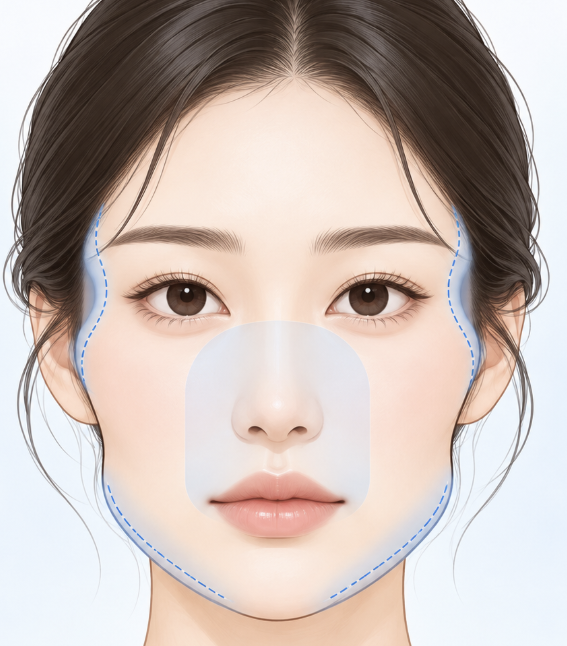
Face shape should be assessed as a whole, including volume, fat, skin elasticity, and the connection between the cheekbones and jawline, in order to check overall balance.
Table of Contents | ||
1. Why Does a Peanut-Shaped Face Develop? 2. Why the Midface Can Look Long 3. Why a Rounded Jawline Stands Out 4. Improvement Options Based on Face Shape |
1. Why Does a Peanut-Shaped Face Develop?
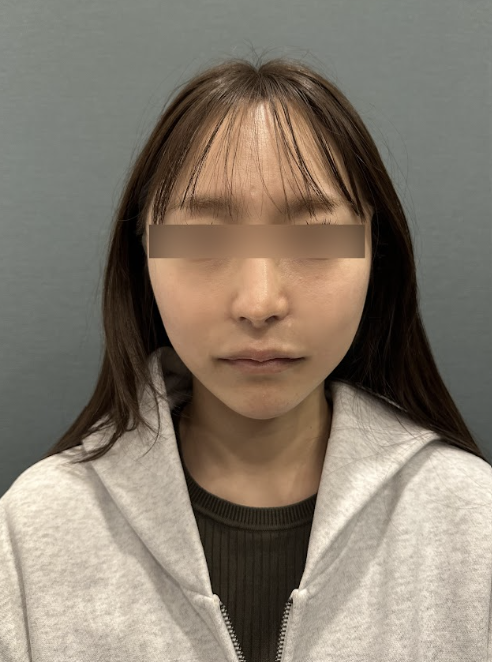
A peanut-shaped face refers to a face shape in which the temples or the center of the cheeks look relatively sunken, while the cheekbones and lower face appear emphasized.
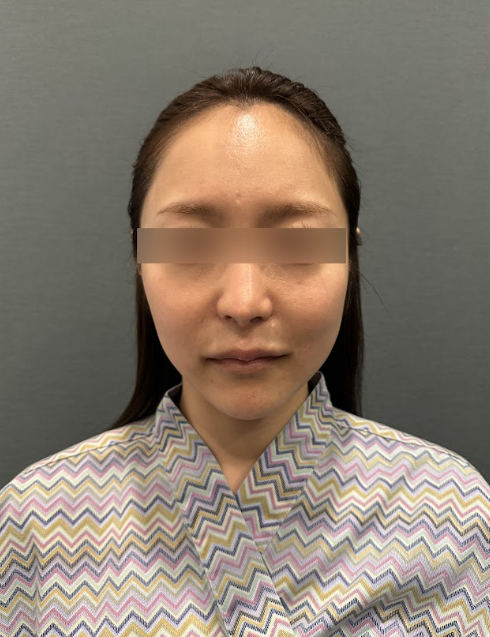
Front-view photo of a woman in a patient gown, eyes blurred for privacy.
When there is insufficient volume in the upper and central parts of the face, the cheekbones may look more prominent than they really are, and the contours can feel more pronounced.
In particular, when a peanut-shaped face, a long-looking midface, and a rounded jawline appear together, the central part of the face may look flat.
Conversely, the lower cheeks and chin area may look relatively heavy, making the overall face shape feel round.
In such cases, simply filling the temples and cheeks is not the only answer.
It is important to first identify which areas lack volume and which areas appear overly emphasized.
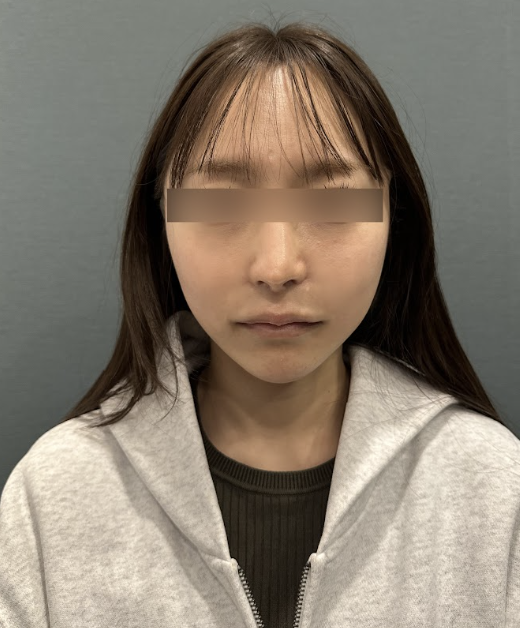
Front-view photo of a woman with bangs wearing a gray hoodie, eyes blurred.
2. Why the Midface Can Look Long
The midface refers to the central area of the face, extending from below the eyes to the area around the nose and the upper lip.
When there is insufficient volume in the front cheeks or the inner area of the cheekbones, the three-dimensional structure at the center of the face weakens, and the midface may appear longer.
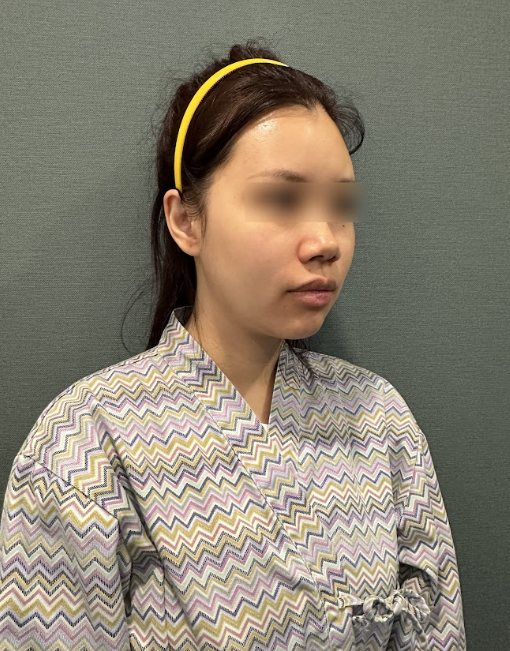
Angled side view of a woman in a patient gown and yellow headband, eyes blurred.
So even if you are concerned about a peanut-shaped face, midface length, or a rounded jawline, it is hard to say that the actual length of your face is the only issue.
This is because factors such as hollowing of the front cheeks, nasolabial folds, cheekbone position, and skin laxity can all contribute.
If insufficient volume is the main cause, options such as filler or collagen-stimulating treatments may be considered.
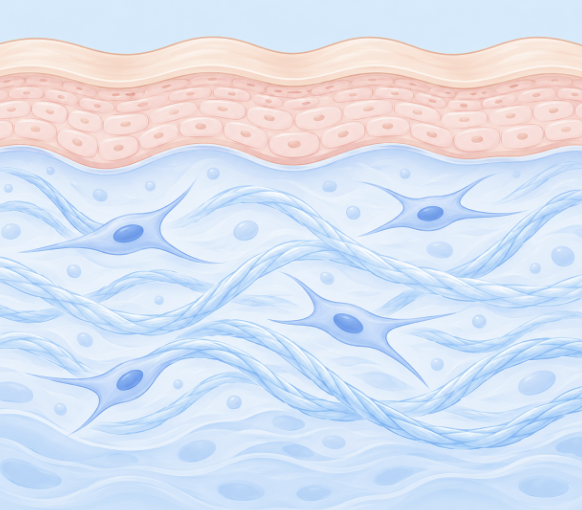
However, adding too much volume can make the face look wide and heavy, which may actually throw off the proportions.
Therefore, rather than simply filling the midface, it is important to check whether the temples and front cheeks connect naturally.
3. Why a Rounded Jawline Stands Out
A rounded-looking jawline is not determined by the shape of the jawbone alone.
Fat in the lower cheeks, skin laxity, muscle development, and the proportion of the chin tip also affect the overall impression.
In particular, faces that show a peanut-shaped contour, a long-looking midface, and a rounded jawline together may appear heavier in the lower half than in the upper half.
The less volume there is in the temples or front cheeks, the wider the jawline and lower cheeks may feel by comparison.
In this case, be careful about simply reducing fat in an attempt to make the face look smaller.
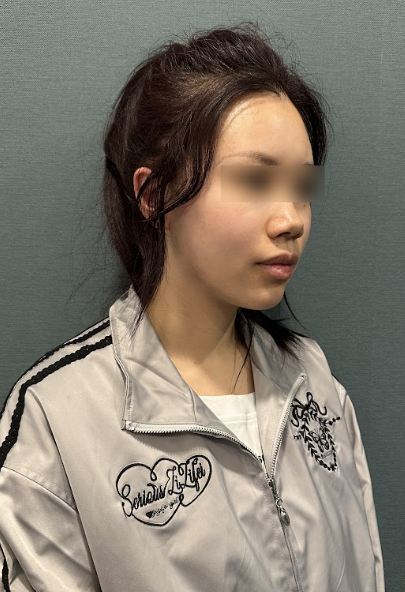
Three-quarter view of a woman in a silver jacket, eyes blurred for privacy.
If the central volume is already lacking, excessively reducing fat may make hollowing look even more noticeable.
For this reason, it is best to evaluate the jawline by looking at skin elasticity and volume distribution, not just the amount of fat.
4. Improvement Options Based on Face Shape
To naturally improve a peanut-shaped face, midface length, and a rounded jawline, you first need to check the proportions of the entire face.
If the temples and front cheeks lack volume, filler or a treatment that stimulates collagen production can help improve the sense of connection.
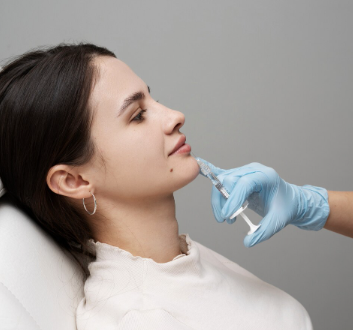
On the other hand, if drooping of the lower cheeks or jawline is the main cause, radiofrequency or ultrasound lifting may be considered.
If skin laxity is relatively pronounced, depending on the condition, supporting the tissue through thread lifting or similar methods may also be an option.
Another front-view photo of a woman with bangs in a gray hoodie, eyes blurred.
When there is excess fat in the lower cheeks, contouring treatments or fat reduction procedures may also be planned together.
However, the same approach does not apply to every face shape.
Although a peanut-shaped face, midface length, and a rounded jawline may look like separate concerns, they are actually connected to facial proportions and three-dimensional structure.
Therefore, rather than blindly adding volume or aggressively slimming the jawline, it is important to aim for overall balance.
Even with the same concerns about a peanut-shaped face, midface length, or a rounded jawline, the degree of volume, fat, and laxity can differ from person to person.
It is best to distinguish between areas that lack volume and areas that look relatively emphasized in your current face, and to plan treatment on an individual basis.
-Operating Hours-
Weekdays 9:00 ~ 18:00 Saturday 9:00 ~ 16:00 Public Holidays / Sundays Regular Closure |
-Contact-
Face Plus Plastic Surgery Clinic | ||
Consultation line: 02-541-8500 Inquiries: KakaoTalk Inquiry |
-Directions-
Frequently Asked Questions
What is a peanut-shaped face?
A peanut-shaped face refers to a face shape in which the temples or the center of the cheeks look relatively sunken, while the cheekbones and lower face appear emphasized. When there is insufficient volume in the upper and central parts of the face, this impression can look even more pronounced.
Which part of the face is the midface?
The midface is the central area of the face, extending from below the eyes to the area around the nose and the upper lip. When there is insufficient volume in the front cheeks or the inner area of the cheekbones, the central structure of the face can look less three-dimensional, making the midface appear longer.
Is a rounded jawline caused by the shape of the jawbone?
A rounded-looking jawline is not determined by the shape of the jawbone alone. Fat in the lower cheeks, skin laxity, muscle development, and the proportion of the chin tip can also affect the overall impression.
How can a peanut-shaped face be improved?
The approach depends on the cause. If volume is lacking, options include filler or treatments that stimulate collagen production. If drooping of the lower cheeks or jawline is the main cause, radiofrequency or ultrasound lifting may be considered. Since the same method does not apply to every face shape, it is best to plan treatment on an individual basis.
Will filling the cheeks solve midface length concerns?
Simply filling the temples and cheeks is often not enough to resolve the issue. Adding too much volume can make the face look wide and heavy, which may actually throw off the proportions. It is important to check whether the temples and front cheeks connect naturally.
Will reducing fat improve a rounded jawline?
Reducing fat without considering other factors requires caution. If central volume is already lacking, excessively reducing fat may make hollowing look more noticeable. It is best to evaluate not only the amount of fat but also skin elasticity and volume distribution.