2026-10-15
Why Do Results Differ With the Same Sinnonhyeon Thread Lifting?
Explains why Sinnonhyeon thread lifting results differ between people, covering skin thickness, fat, sagging patterns, face shape, and thread insertion direction.
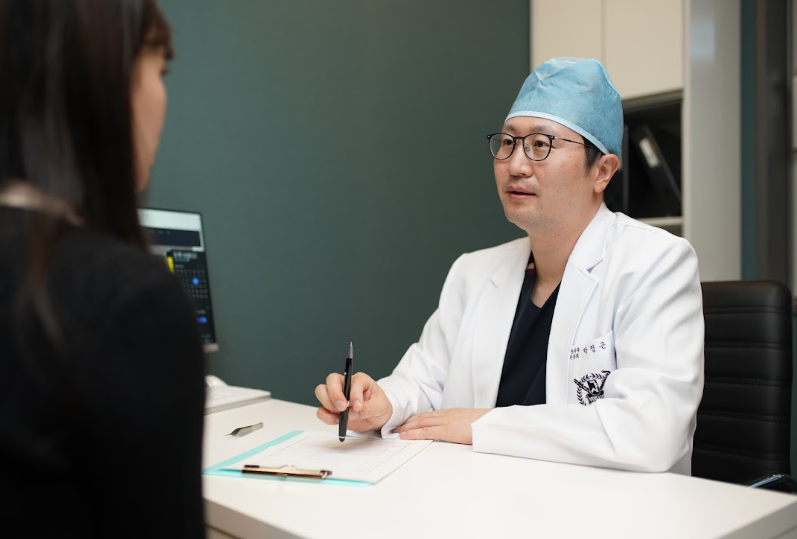
※ This post is written to provide medical information.
Please note that it is not subject to review under Article 56(2) and Article 57 of the Medical Service Act and is not an advertising post unrelated to such review.
Hello,
I am Park Jeong-geun, Director of Face Plus Plastic Surgery Clinic.
As we get older, the cheeks start to sag and the jawline becomes less defined.
When you notice these changes, you may start to consider a lifting procedure.
While researching Sinnonhyeon thread lifting and comparing reviews of various procedures, one question may come to mind:
Why do some people have a sharply defined jawline after the same type of thread is used, while others show little visible change?
Thread lifting is not simply about pulling the skin. It requires considering each person's facial structure and the direction in which the tissue has sagged.
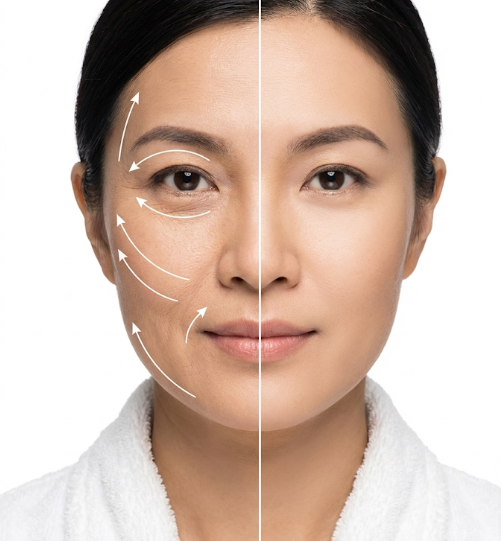
Today, we will look at the criteria worth checking when reviewing actual procedure experiences, along with the factors that influence results.
Table of Contents | ||
1. Why Results Differ Even When the Same Thread Is Used 2. Lifting Design Based on Face Shape 3. Insertion Direction Matters More Than Thread Count 4. What to Check in Thread Lifting Reviews |
1. Why Results Differ Even When the Same Thread Is Used
The question people researching Sinnonhyeon thread lifting ask most often is about individual differences in results.
Thread lifting involves inserting medical-grade threads beneath the skin to physically support sagging tissue.
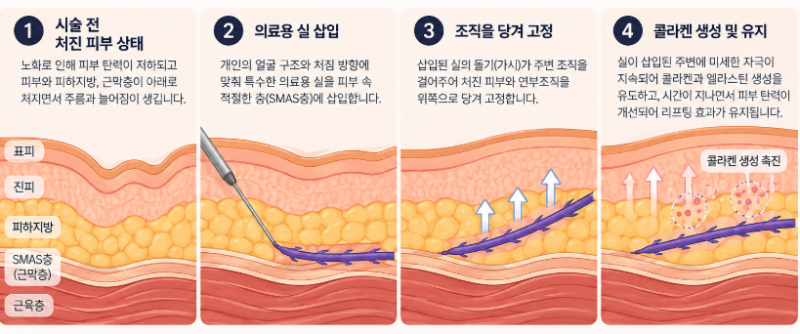
However, even when the same type of thread is used, not everyone experiences the same change.
This is because skin thickness and elasticity, the amount of subcutaneous fat, and the degree of tissue sagging all vary from person to person.
For example, if the skin is relatively thin, surface irregularities may become visible depending on the placement and tension of the threads.
On the other hand, when there is more subcutaneous fat, the lifting direction should be set with the weight of the tissue and the degree of sagging in mind.
Therefore, when planning Sinnonhyeon thread lifting, it is important to assess your current facial condition first rather than simply comparing thread types.
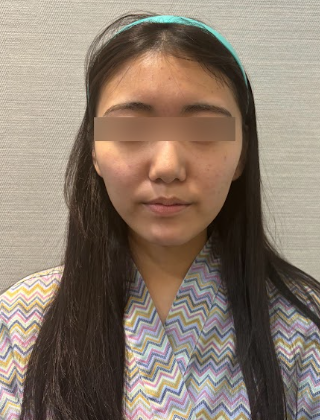
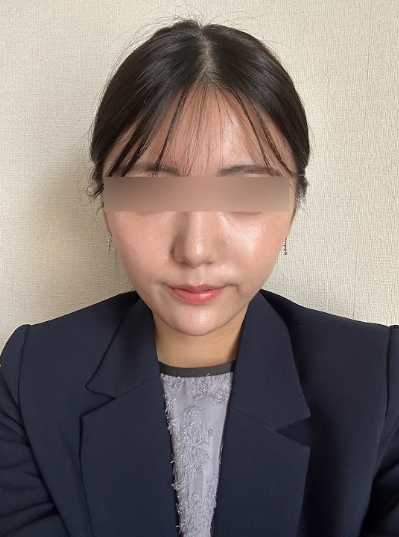
When reviewing before-and-after photos, be sure to check not only changes in the cheeks and jawline but also overall facial balance.
2. Lifting Design Based on Face Shape
One important factor in thread lifting is a design tailored to the individual's face shape.
When considering Sinnonhyeon thread lifting, it is necessary to identify which area has sagged rather than simply pulling the skin upward.
For example, a case where the cheek fat has descended and the nasolabial folds appear more pronounced is different from a case where the jawline has become blurred.
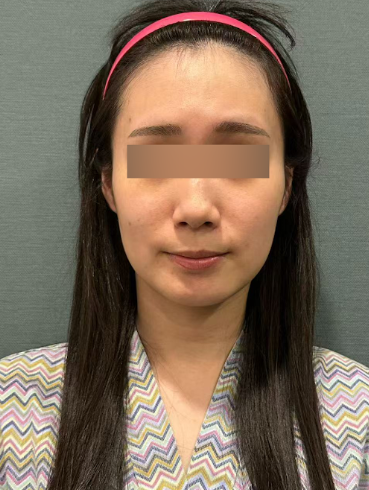
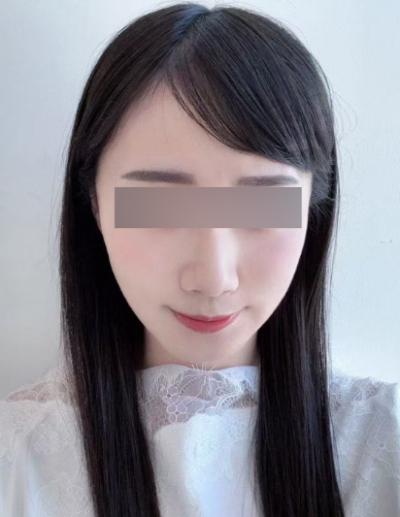
Both cases involve sagging, but the direction in which the tissue has shifted and the support points needed may differ.
If excessive tension is applied to a face that already has sufficient volume around the cheekbones, certain areas may appear prominent.
Conversely, if areas with significant sagging are not adequately supported, the results may fall short of expectations.
Therefore, a personalized design should be planned by evaluating facial symmetry, skin elasticity, and fat distribution together.
For Sinnonhyeon thread lifting, it is more important to take your existing facial features into account than to pull as hard as possible across the board.
3. Insertion Direction Matters More Than Thread Count
During thread lifting consultations, it is common to compare options by thread count, such as 4-thread, 8-thread, or 12-thread versions.
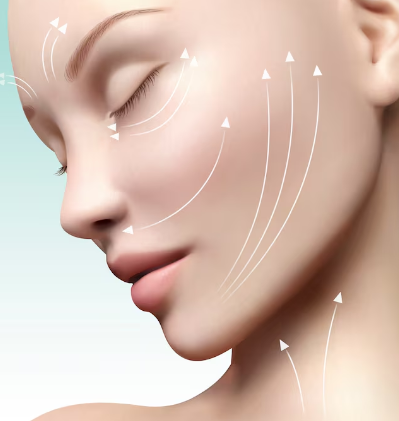
However, a higher thread count does not necessarily lead to better results.
With Sinnonhyeon thread lifting, what matters is not only the number of threads but also where they are inserted and the direction in which they support the tissue.
Threads differ in structure and characteristics depending on their type, and the layer of insertion and the tension applied also influence the treatment plan.
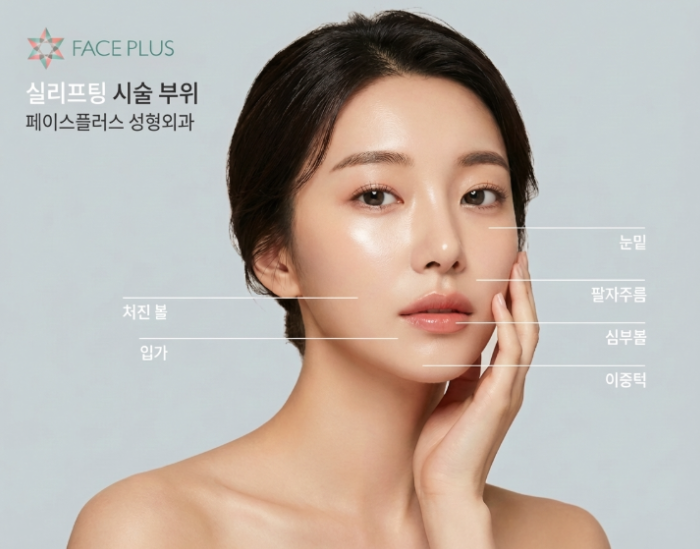
If tension concentrates in a specific area, dimpling where the skin surface dips inward or temporary irregularities may appear.
In addition, if the threads are placed in a direction that does not match the tissue's sagging, it becomes difficult to achieve the desired contour change.
Therefore, the number of threads needed should be determined by considering skin condition and the degree of sagging, rather than facial size alone.
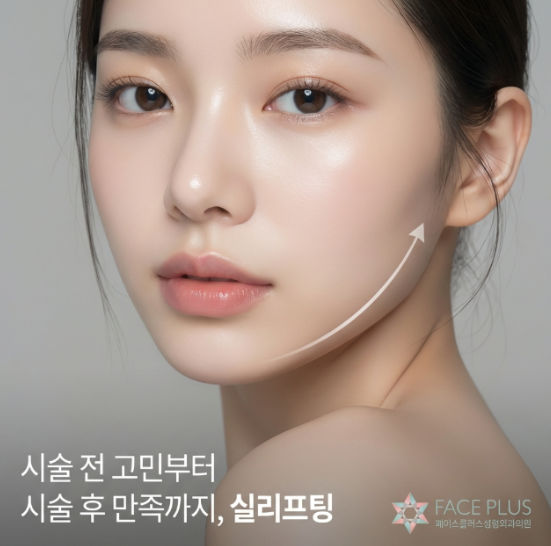
When choosing Sinnonhyeon thread lifting, it is advisable to check not only how many threads will be used but also the direction in which they will support the tissue.
4. What to Check in Thread Lifting Reviews
When you look through Sinnonhyeon thread lifting reviews, you will find a range of cases, from photos taken right after treatment to those taken after a period of time has passed.
What matters here is not simply how much smaller the face appears.
When comparing photos, first check whether the face angle, lighting, expression, and timing of the shots are similar.
Even a slight head tilt or a change in lighting can make the jawline and cheek contours look different.
Also, right after treatment, the facial contour may look different due to swelling or tissue tightening.
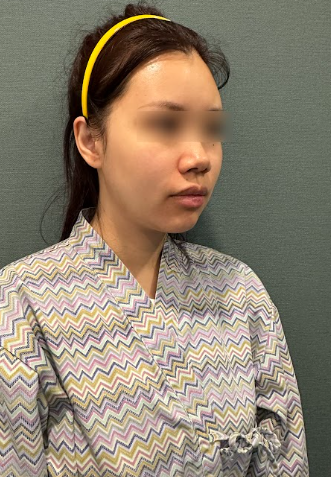
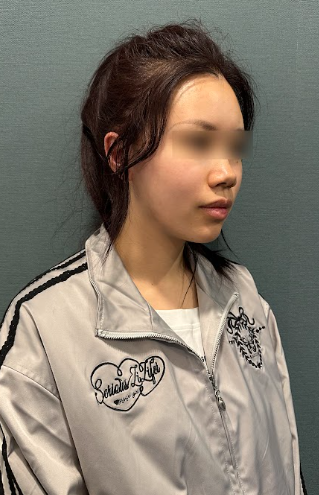
As time passes, the swelling subsides and the tissue settles, which can result in differences from the initial appearance.
Therefore, when reviewing Sinnonhyeon thread lifting results, it is best to look at both immediate post-procedure photos and follow-up photos together to understand how the changes have progressed.
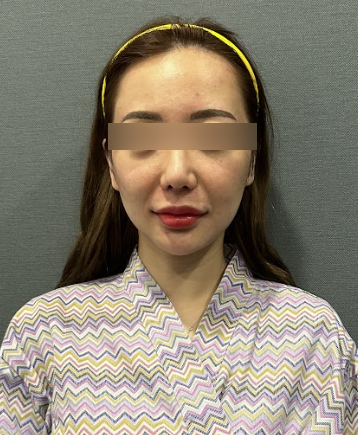
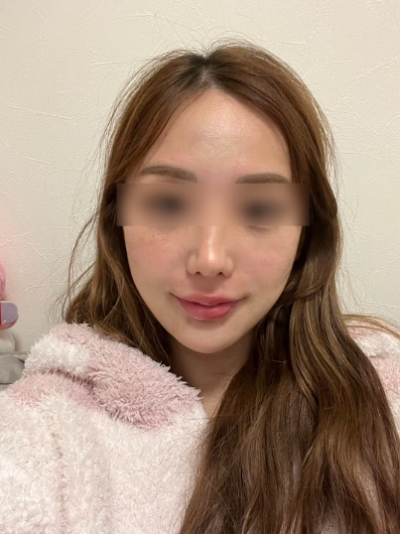
Depending on the individual, bruising, swelling, pain, dimpling, and asymmetry may occur, and recovery speed and how long results last can also vary.
In particular, some skin sagging may be difficult to improve with thread lifting alone, so it is necessary to evaluate whether the procedure is appropriate for you.
-Business Hours-
Weekdays 9:00 ~ 18:00 Saturday 9:00 ~ 16:00 Public Holidays / Sundays Regular closure |
-Contact-
Face Plus Plastic Surgery Clinic | ||
Consultation phone: 02-541-8500 Inquiries: Contact us on KakaoTalk |
-Directions-
Frequently Asked Questions
Why do thread lifting results differ even when the same thread is used?
This is because each person's skin thickness and elasticity, amount of subcutaneous fat, and degree of tissue sagging differ. The article explains that even when the same type of thread is used, the same change does not appear in everyone.
Is it enough to compare only the thread types for Sinnonhyeon thread lifting?
No. This article explains that rather than comparing thread types alone, you should first assess your current facial condition. It is important to consider factors such as skin thickness, subcutaneous fat, and degree of sagging together.
Is thread lifting better with more threads?
Not necessarily. The article explains that the insertion site, the direction of tissue support, skin condition, and degree of sagging should all be considered alongside the number of threads.
What should I check when reading thread lifting reviews?
It is best to first check whether the face angle, lighting, expression, and timing of the photos are similar. The article also suggests reviewing immediate post-procedure photos alongside follow-up photos to see how the changes progress.
Can swelling or bruising occur after thread lifting?
Yes. Depending on the individual, bruising, swelling, pain, dimpling, and asymmetry may occur. This article also notes that recovery speed and how long results last can vary.