2026-10-19
Ptosis Correction: Why Double Eyelid Surgery Alone May Not Be Enough
Explains how blepharoptosis differs from general eyelid drooping, why double eyelid surgery alone may not be enough, when ptosis correction is needed, and what to check before surgery, including eye-opening muscle function and eyelid height.
※ This post is intended to provide medical information.
Please note that it is not subject to review under Articles 56(2) and 57 of the Medical Service Act, and it is not promotional content unrelated to the subject of such review.
Hello,
This is Park Jeong-geun, Director of Face Plus Plastic Surgery Clinic.

Many people consider double eyelid surgery because their eyes look small or sleepy. However, if the muscle that lifts the eyelid is weak, creating a crease alone may have its limits. In such cases, ptosis correction is an option worth considering. It is important to look at both the function and the structure of the eyes, rather than simply trying to make them look bigger.

Table of Contents | ||
1. Blepharoptosis vs. General Eyelid Drooping 2. Why Double Eyelid Surgery Alone May Not Be Enough 3. When Ptosis Correction Is Needed 4. What to Check Before Surgery |
1. Blepharoptosis vs. General Eyelid Drooping
Blepharoptosis is a condition in which the upper eyelid droops due to weak function of the muscle that lifts it, or due to a structural problem.

Even when you open your eyes comfortably, the upper part of the pupil may be significantly covered, or your vision may feel restricted. When these symptoms appear, people often unconsciously use their forehead muscles to open their eyes wider. As a result, forehead wrinkles can form, or you may feel fatigue when opening your eyes.
However, not every case of drooping eyelids is blepharoptosis.
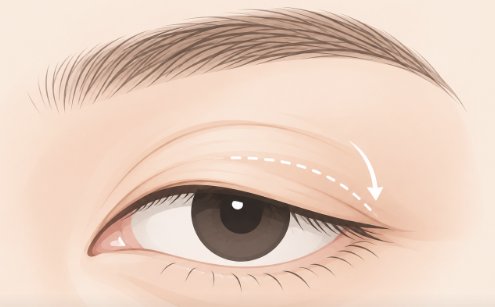
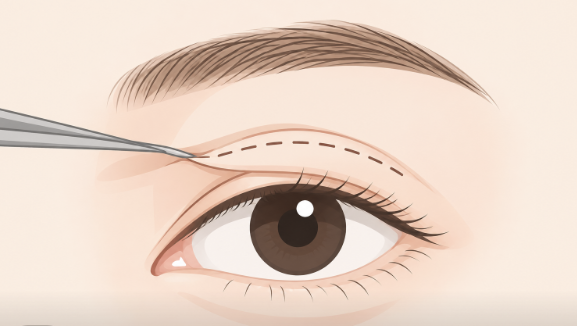
This is because loose skin or a lowered eyebrow position can produce a similar appearance. Therefore, if you are considering ptosis correction, it is necessary to first accurately determine whether the problem is truly related to muscle function.
2. Why Double Eyelid Surgery Alone May Not Be Enough
Double eyelid surgery creates a fold in the eyelid to change the external appearance of the eye.
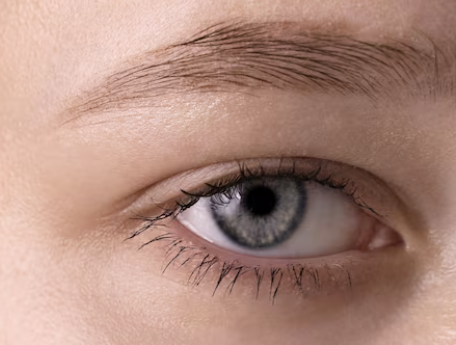
In contrast, ptosis correction aims to adjust the action of the muscle that lifts the eye and to control the height of the eyelid. In other words, the two procedures clearly differ in the problems they address and in their approach.
If a crease is created without sufficient eye-opening strength, the eyes may still look sleepy. Also, even if the crease is raised higher, the expected change may not appear if the eyelid itself does not lift enough. For this reason, it is important to approach ptosis correction differently from a standard double eyelid procedure.
That said, not every double eyelid surgery requires ptosis correction.
If eye-opening function is normal, double eyelid surgery alone can achieve the desired change.
3. When Ptosis Correction Is Needed
Whether ptosis correction is needed is determined by considering the position of the eyelid, muscle function, eye-opening habits, and other factors.

Typical signs include the eyelid excessively covering the pupil when the eyes are relaxed, or raising the forehead to open the eyes. Precise evaluation is also needed when the eyes are at different heights or when only one eye looks noticeably sleepy.
However, these features alone cannot determine whether surgery is needed. The thickness and elasticity of the eyelid skin, the position of the eyebrows, and the condition of the eyeball must also be considered.
In particular, because ptosis correction involves adjusting eye-opening function, a plan tailored to each person's condition is essential.

Excessive correction may prevent the eyes from closing completely or cause dryness. Conversely, insufficient correction may not adequately improve the drooping of the eyelid.
4. What to Check Before Surgery
When planning ptosis correction, it is not enough to simply check how much bigger the eyes will look.
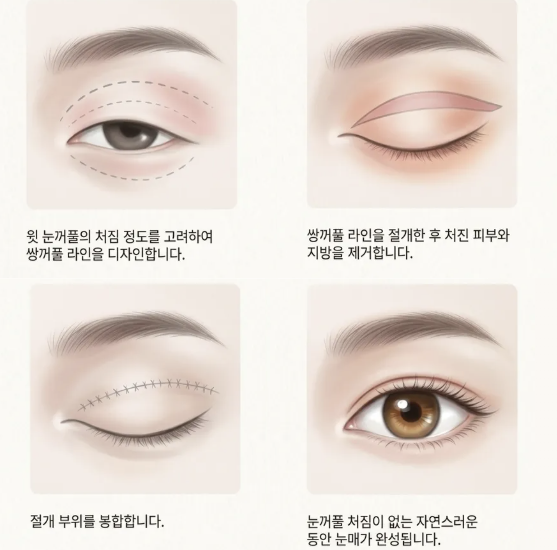
Four steps: crease designed to the degree of sagging, loose skin and fat removed via the incision, sutured, natural youthful-looking eyes.
First, the function of the eye-opening muscle and the eyelid height should be objectively evaluated, and any difference between the two eyes should be checked. As needed, the movement of the muscle that lifts the eyelid, the eye closure, and the presence of dry eye are also examined. Whether an incision or non-incision method is suitable depends on each patient's anatomical characteristics. When skin laxity is severe or previous surgery has caused tissue changes, a more careful approach may be needed. Ptosis correction is not simply about changing the size of the eyes; it is a process of balancing function and appearance.
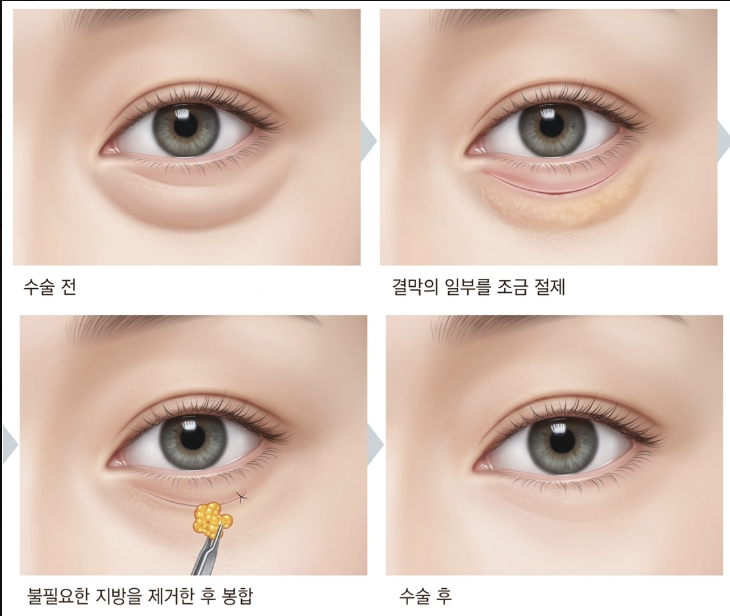
Lower eyelid steps: before surgery, a small cut in the conjunctiva, excess fat removed and sutured, after surgery.
After surgery, swelling, asymmetry, and discomfort when closing the eyes may occur, so monitoring the recovery process is important. Ultimately, the goal is not simply to create big, bright eyes, but to find the approach that best suits your eye structure.
If you are concerned about eyelid drooping that cannot be resolved with double eyelid surgery alone, we recommend getting an accurate diagnosis first.
-Business Hours-
Weekdays 9:00 ~ 18:00 Saturday 9:00 ~ 16:00 Public Holidays / Sundays Regular Closure |
-Contact-
Face Plus Plastic Surgery Clinic | ||
Consultation: 02-541-8500 Inquiry: KakaoTalk Inquiry |
-Directions-
Frequently Asked Questions
Is blepharoptosis different from general eyelid drooping?
Yes, the causes can differ. Blepharoptosis is a condition in which the eyelid droops due to weak function of the muscle that lifts the upper eyelid or due to a structural problem. Loose skin or a lowered eyebrow position can look similar.
Are there cases where double eyelid surgery alone is not enough?
Yes. If the muscle that opens the eyes is weak, a crease alone may have limited effect. Even if the crease is raised, the expected change may not appear if the eyelid itself does not lift sufficiently.
How is ptosis correction different from double eyelid surgery?
The two procedures have different goals and approaches. Double eyelid surgery aims to change the external appearance by creating a fold in the eyelid, while ptosis correction focuses on adjusting the action of the muscle that lifts the eye and the height of the eyelid.
What should be checked before surgery?
It is important to objectively assess eye-opening muscle function, eyelid height, and any difference between the two eyes. As needed, eye closure and dry eye are also examined. Checking only how much bigger the eyes will look is not sufficient.
What happens if the amount of correction is too large or too small?
Excessive correction may prevent the eyes from closing fully or cause dryness. Conversely, insufficient correction may not adequately improve the drooping of the eyelid.