2026-10-02
Mini-Facelift vs. Thread Lift: What's the Difference If You're Concerned About Sagging?
Understand the differences between a mini-facelift and a thread lift. Learn which facial lifting option is best suited for your sagging cheeks and jawline laxity based on tissue conditions and anatomy. (198 chars / 29 words - fits 50-200 range)

※ This article is provided for medical informational purposes only.
It is not subject to review under Articles 56-2 and 57 of the Medical Service Act, and we advise that this is not an advertisement unrelated to informational review standards.
Hello,
I am Dr. Jeong-geun Park,
Director of Face Plus Plastic Surgery Clinic.

As time goes by, many people
notice that their facial contours
are not quite what they used to be.
In particular, when the cheeks start to sag
or the jawline begins to lose its definition,
people often begin exploring lifting procedures.
During this search, the two options
most frequently compared
are the mini-facelift and the thread lift.
Both can be considered
to re-contour a sagging face,
but their fundamental approaches differ.
Therefore, rather than simply deciding
that one method is superior to the other,
it is crucial to evaluate the current degree and location of sagging,
as well as changes in the skin condition and soft tissues.

Today, let us take a detailed look
at the key differences
between a mini-facelift and a thread lift.
Table of Contents | ||
1. Why does facial sagging occur? 2. Difference between a mini-facelift and a thread lift 3. When should each option be considered? 4. What to check before a lifting procedure |
1. Why does facial sagging occur?
Facial changes are not solely caused
by a loss of skin elasticity.
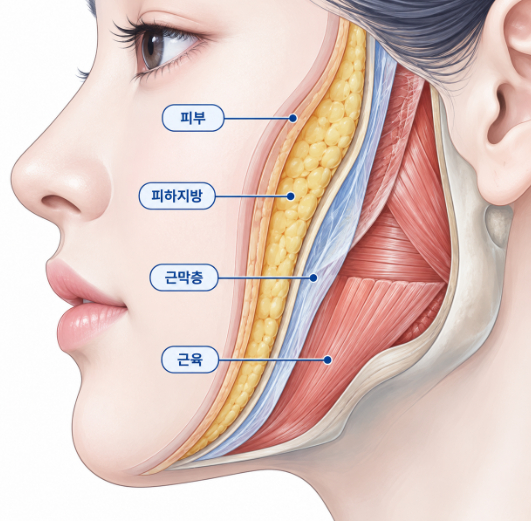
Over time, changes occur
not only in the skin itself, but also across various tissues
such as subcutaneous fat, retaining ligaments, and the SMAS layer.
When these changes combine,
the cheeks can appear to descend downward
and the definition of the jawline can blur.

Therefore, when considering a mini-facelift
or a thread lift,
rather than focusing only on visible surface wrinkles,
it is necessary to first identify
which tissue changes are impacting the facial contour.
2. Difference between a mini-facelift and a thread lift
The greatest difference between the two
lies in the method used
to address the sagging tissues.
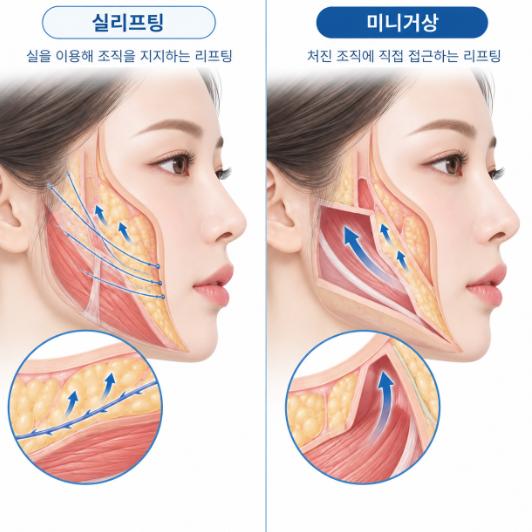
A thread lift uses medical-grade threads
to support or reposition
the underlying tissues.
It involves comparatively less burden regarding incisions
and allows targeted lifting focused
on specific facial areas.
In contrast, a mini-facelift
approaches the sagging tissues
through limited incisions.
Rather than merely pulling the skin surface,
it examines the state of the tissues beneath the skin
and plans the extent of the lift
according to the location and vector of sagging.
Even within mini-facelifts,
the incision length and extent of dissection
are not identical for everyone.

The direction in which tissues are repositioned
also varies depending
on each patient's individual anatomy.
3. When should each option be considered?
If facial sagging is relatively mild
or if the goal is to refine specific contours,
a thread lift can be considered.
On the other hand, if tissues around the cheeks and mouth
have descended collectively,
compromising the entire jawline,
consulting on various surgical lifting options,
including a mini-facelift, can be beneficial.
Even among individuals of the same age group,
skin thickness, elasticity, fat volume,
and facial skeletal structure vary.
Where the sagging originates
and which areas appear most prominent
differ from person to person.
For some, reduced skin elasticity may be the primary concern,
while for others, the structural descent of cheek tissues
may play a much larger role
in altering the facial contours.
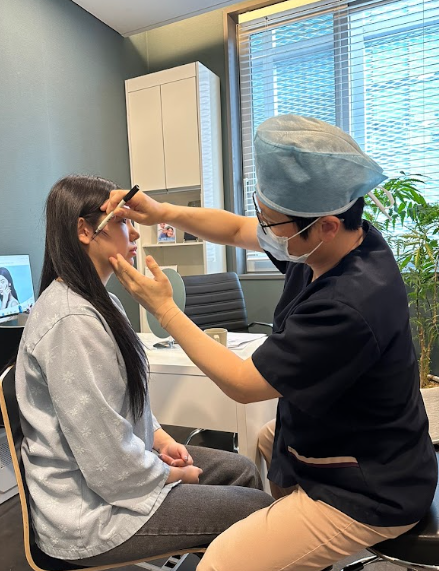
Therefore, determining whether a mini-facelift
or a thread lift is more suitable
requires an assessment of the face,
guiding the choice toward what best meets the individual's needs.
4. What to check before a lifting procedure
When looking into lifting options,
one should not simply focus on
how strongly the tissues can be pulled.

This is because the face flows
as a continuous unit,
from the cheeks to the mouth and down to the jawline.
In particular, if considering a mini-facelift,
it is essential to examine
which target area is being addressed.
It is wise to check the extent of incisions and dissection,
as well as the vector
in which tissues will be repositioned.
Additionally, one should be thoroughly informed
about the recovery process, scar care,
and the potential for swelling or bruising.
Taking into account the current facial bone structure and volume,
one must pinpoint the prominent areas of sagging
and evaluate overall facial harmony.
A mini-facelift and a thread lift are neither identical techniques
nor simply different intensities of the same procedure.
Ultimately, what matters most
is not choosing a procedure name,
but identifying the underlying cause of sagging.
If changes in your facial contours are a concern,
taking the time to thoroughly assess your skin, fat, and surrounding tissues,

and planning a lifting approach tailored
to your specific facial condition,
will yield the best results.
-Operating Hours-
Weekdays 9:00 AM – 6:00 PM Saturday 9:00 AM – 4:00 PM Sundays & Public Holidays Closed |
-Contact Information-
Face Plus Plastic Surgery Clinic | ||
Consultation Line: +82-2-541-8500 Inquiries: KakaoTalk Inquiry |
-Location & Directions-
Frequently Asked Questions
Is facial sagging caused solely by reduced skin elasticity?
No. In addition to decreased skin elasticity, structural changes in subcutaneous fat, retaining ligaments, and the SMAS layer combine to cause cheek drooping and loss of jawline definition.
What is the biggest difference between a mini-facelift and a thread lift?
The primary difference lies in the surgical approach to the sagging tissue. A thread lift utilizes medical-grade sutures to support or elevate tissue without major incisions, whereas a mini-facelift accesses underlying tissues through limited incisions to directly reposition structural layers.
When is a thread lift more suitable?
A thread lift is ideal when facial laxity is relatively mild or when targeting specific localized contour adjustments. It is preferred by those who wish to avoid incisions and want minimal downtime.
Who is a good candidate for a mini-facelift?
A mini-facelift is recommended when midface, cheek, and perioral tissues have significantly descended, blurring the jawline. It repositions the deeper structural tissues along custom vectors rather than simply pulling superficial skin.
What should be evaluated before deciding on a mini-facelift?
You should verify the planned incision and dissection margins, as well as the vector of tissue elevation. Additionally, it is critical to balance facial harmony, bone contours, and volume, while understanding the recovery timeline, scar management, and risk of swelling or bruising.