2026-09-18
Middle-Aged Lower Blepharoplasty: Check If Your Under-Eyes Look Saggy and Tired
Explore middle-aged lower blepharoplasty for sagging, bulging, and tired-looking under-eyes. Learn about causes, fat repositioning vs. removal, and key tips for natural results.
※ This article is provided for medical information purposes.
Please note that this content is not subject to review under Article 56, Paragraph 2 and Article 57 of the Medical Service Act, and is not an advertisement unrelated to review contents.
Hello,
I am Dr. Jeong-Geun Park,
Director of Face Plus Plastic Surgery.
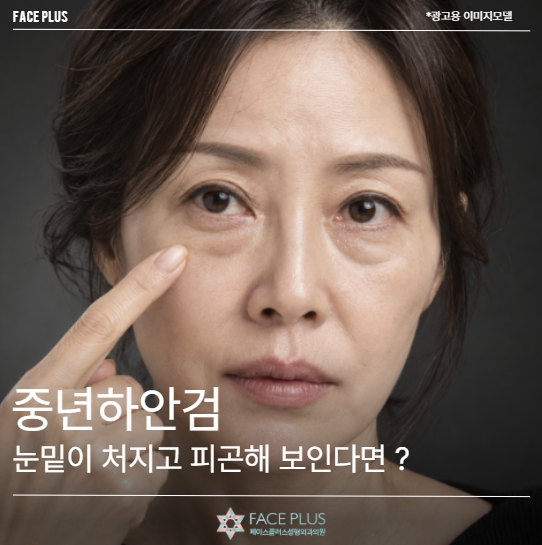
As we get older, one of the first areas
on the face where we notice changes
is the under-eye region.
If you look tired even after getting enough rest,
and your under-eye area appears bulging or sagging,
it might not be just a matter of fatigue.
In middle age and beyond, skin elasticity decreases,
and structural changes occur in the surrounding tissues,
which can alter the appearance beneath your eyes.
Because of these changes,
an increasing number of people are looking into
middle-aged lower blepharoplasty.
However, simply having sagging under-eyes
does not mean everyone requires the exact same approach.
It is essential to examine the under-eye fat, skin elasticity,
and the condition of the surrounding tissues
to determine the appropriate direction for you.
Table of Contents | ||
1. Why does the under-eye area change in middle age? 2. When should you consider lower blepharoplasty? 3. Is simply removing fat enough? 4. Points to consider for natural results |
1. Why does the under-eye area change in middle age?
The skin around the eyes is relatively thin,
making it an area where age-related changes
are particularly noticeable.
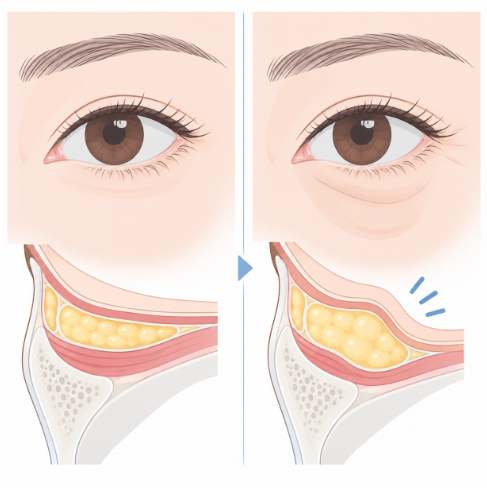
Over time, as skin elasticity decreases
and the tissues supporting the eye area weaken,
the orbital fat beneath the eyes can bulge forward.
When sagging skin is added to this,
it creates contours and shadows under the eyes,
resulting in a perpetually tired expression.
In particular, those considering middle-aged lower blepharoplasty
often experience not just fat protrusion,
but also skin laxity at the same time.
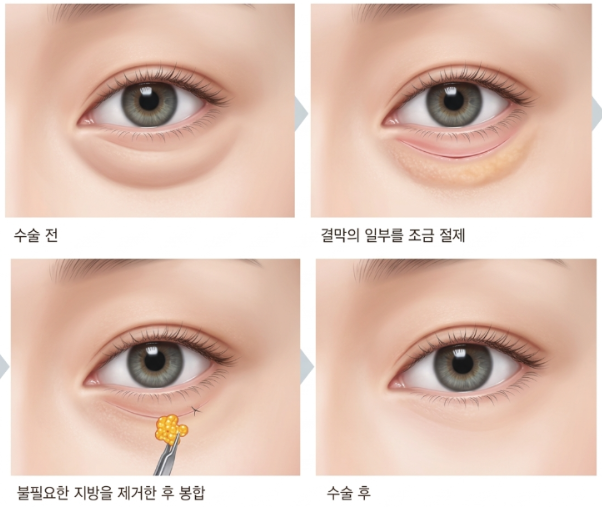
Because fine lines and deepened under-eye hollows
can appear simultaneously,
it is difficult to attribute the issue to a single factor.
Therefore, rather than merely focusing on the bulging areas,
it is crucial to evaluate the structural changes
under the eyes as a cohesive whole.
2. When should you consider lower blepharoplasty?
Middle-aged lower blepharoplasty is one of the effective methods
to consider when improving various changes
caused by under-eye aging.
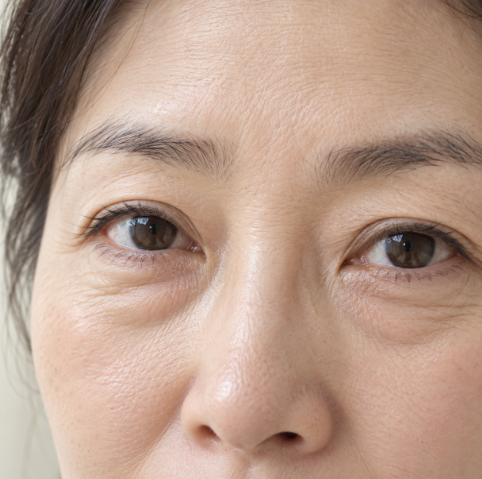
You may explore this option if your under-eyes look puffy and bulging,
if the skin appears droopy and sagging downward,
or when wrinkles become noticeable.
Notably, when under-eye hollows and contours form,
they cast dark shadows that look
much like dark circles.
This can make you appear constantly exhausted
or older than your actual age,
even after a good night's rest.
However, even within the same middle-aged age group,
skin thickness, the amount of fat,
and the level of elasticity vary from person to person.
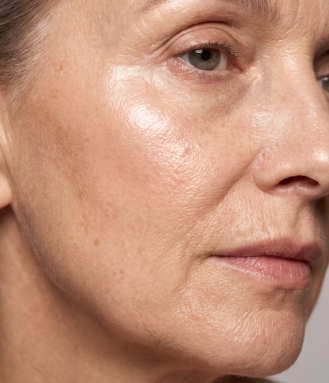
Therefore, when deciding on middle-aged lower blepharoplasty,
the decision should be based on your current physical condition
rather than merely considering chronological age.
3. Is simply removing fat enough?
When the under-eye area appears bulging,
it is easy to assume that simply
removing plenty of fat is the solution.
However, simply removing as much fat as possible
does not automatically lead
to a natural-looking outcome.
If excessive fat is removed,
the under-eye area may become hollowed out
or existing indentations may become more pronounced.
For this reason, when planning middle-aged lower blepharoplasty,
one must examine not only the degree of fat protrusion,
but also any sunken or hollow areas.
It is also necessary to evaluate
the degree of skin laxity
and the condition of surrounding tissues.
Depending on your unique under-eye anatomy,
the surgical approach can differ, such as trimming fat
or performing fat repositioning.

Ultimately, what matters is not aggressively removing fat,
but establishing a personalized plan
tailored to your current under-eye structure.
4. Points to consider for natural results
If you are considering middle-aged lower blepharoplasty,
it is important to assess harmony with the entire face,
rather than looking at the under-eyes in isolation.
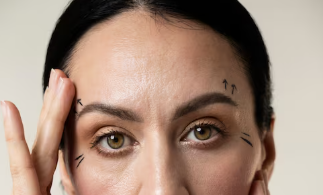
You must carefully check the shape of your eyes, under-eye skin condition,
the location and amount of fat deposits,
as well as the degree of wrinkling.
Moreover, it is recommended to have thorough consultations
not only regarding the surgical technique,
but also on anticipated outcomes and the recovery process.
Rather than aimlessly pulling the under-eye area taut,
the key is to refine it naturally
while preserving your innate eye shape and facial expression.
Because every individual has a different under-eye structure
and rate of aging,
the required surgical techniques also vary.
If you are troubled by a tired-looking expression
caused by under-eye sagging or puffiness,
starting with an accurate evaluation of your current state is ideal.
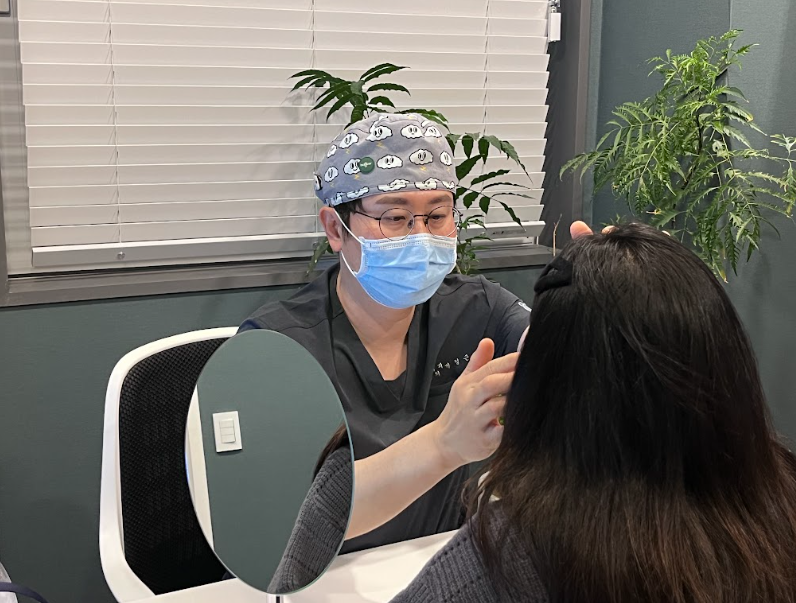
Based on comprehensive diagnosis and consultation,
we encourage you to carefully determine the necessary extent
and technique tailored specifically to you.
Please note that surgical techniques, recovery timelines, and final results
may vary depending on individual anatomical conditions.
- Office Hours -
Weekdays 9:00 AM ~ 6:00 PM Saturdays 9:00 AM ~ 4:00 PM Sundays / Public Holidays Closed |
- Inquiries -
Face Plus Plastic Surgery | ||
Phone Consultation: 02-541-8500 Inquiries: KakaoTalk Inquiry |
- Location -
Frequently Asked Questions
Why do under-eyes become bulging and saggy with age?
It is caused by reduced skin elasticity and the weakening of supporting orbital tissues. Because the skin around the eyes is thin, aging shows quickly; as tissues weaken, fat bulges out and sagging skin creates shadows and hollow contours, making you look tired.
When should I consider middle-aged lower blepharoplasty?
It is considered when the under-eye area bulges, the skin sags, or deep wrinkles become prominent. You can also consider it when under-eye hollows cast shadows resembling dark circles, or when you persistently appear fatigued even after resting.
Is it best to remove as much under-eye fat as possible?
No. Removing excessive fat can cause the under-eye area to look hollowed or exacerbate tear troughs. It is essential to formulate an individualized plan, such as fat repositioning, by simultaneously assessing both protruding and sunken areas.
What should be considered to achieve natural lower blepharoplasty results?
You must evaluate overall facial harmony rather than focusing solely on the under-eye area. A thorough consultation is crucial to examine eye shape, skin elasticity, fat distribution, and wrinkle severity, as well as expected changes and the recovery timeline.