2026-10-16
Gangnam Thread Lift Clinic: Why Do Dimples Form After a Thread Lift?
Covers what thread lift dimples are, why they form, how long they take to ease, and what to check to help prevent them.

※ This article is intended to provide medical information.
Please note that it is not subject to review under Article 56, Paragraph 2 and Article 57 of the Medical Service Act, and that it is not an advertising post unrelated to review content.
Hello,
This is Dr. Park Jeong-geun, director of Face Plus Plastic Surgery Clinic.

Thread lifting is a non-surgical method that uses threads to pull sagging skin tissue and improve facial contours. However, after the procedure, the skin surface may become uneven, or certain areas may sink inward. This phenomenon is called a dimple, and it can sometimes appear temporarily as the skin is pulled.
Many people who visit a Gangnam thread lift specialty clinic also wonder whether dimples are a side effect.
Today, we will take a closer look at the causes of dimples after thread lifting, the recovery process, and what to check to help prevent them.
Table of Contents | ||
1. What Is a Thread Lift Dimple? 2. Causes of Dimples 3. Recovery Period and Aftercare for Dimples 4. Checklist for Preventing Dimples |
1. What Is a Thread Lift Dimple?
A thread lift dimple is a phenomenon in which part of the skin surface sinks inward or develops irregular contours after the procedure.
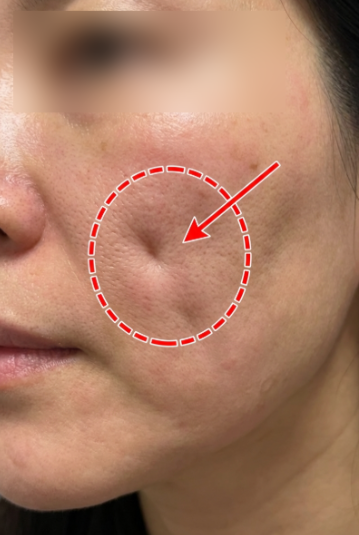
They mainly appear on the cheeks, under the cheekbones, around the corners of the mouth, and along the jawline, and they may become more noticeable when you make facial expressions.
Thread lifting works on the principle that the barbs of threads inserted under the skin catch the surrounding tissue and pull it upward.
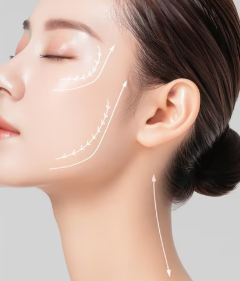
During this process, if the tension transmitted to the skin and subcutaneous tissue is uneven, depressions can appear in certain areas. When evaluating this, a Gangnam thread lift specialty clinic distinguishes between skin wrinkles and tissue pulling.
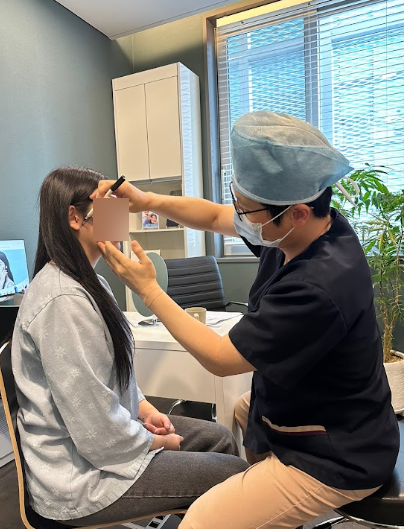
Mild dimples that appear right after the procedure may gradually ease as swelling subsides and the tissue adapts. However, if the depression is severe or accompanied by pain, you should have your medical team check it.
2. Causes of Dimples
The cause of dimples after thread lifting is difficult to pin down to a single factor.
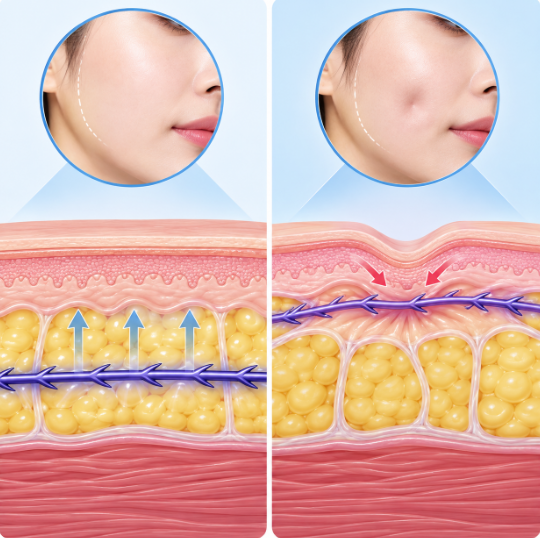
Key factors include the depth at which the thread is inserted, the direction in which the tissue is pulled, and differences in tension. If a thread is placed too close to the skin surface, the skin can be pulled and the depression may become more prominent. Conversely, pulling too strongly without considering tissue thickness or the degree of sagging can make the skin surface uneven. In particular, if there is little cheek fat or the skin is thin, even small contour irregularities tend to be noticeable.
When looking for a Gangnam thread lift specialty clinic, it is more important to check whether they consider skin thickness and fat distribution than simply how many threads they use.
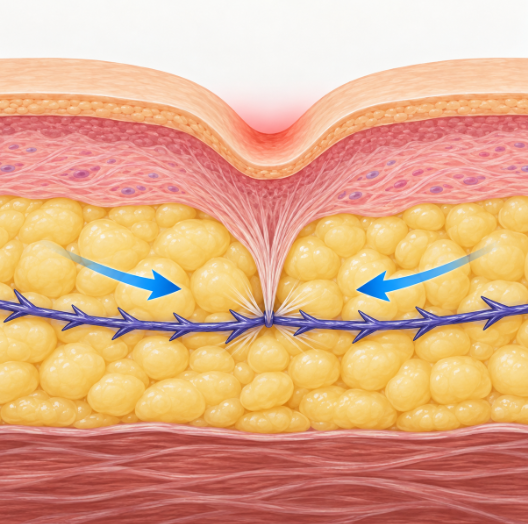
In addition, if the anchoring points and pulling direction of the threads are not appropriate, certain areas may look even more sunken when the face moves. For this reason, it is important to plan the procedure with full consideration of the face's anatomical structure.
3. Recovery Period and Aftercare for Dimples
Not all dimples that appear after thread lifting are permanent.
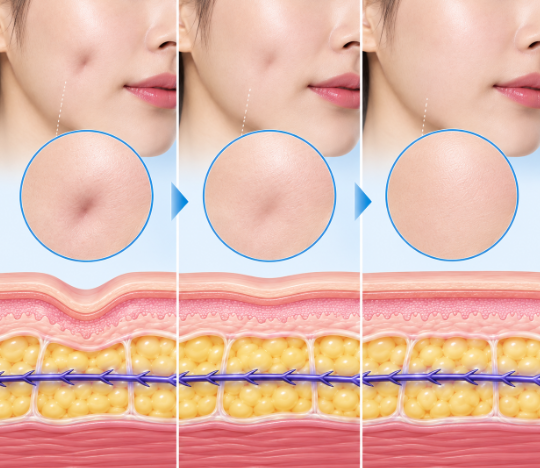
In the early stage, tissue swelling and the pulling effect of the threads can work together to make skin contours more noticeable. Mild dimples may ease over several days to a few weeks, but recovery speed varies from person to person.
When a Gangnam thread lift specialty clinic checks progress after the procedure, it also looks at the depth and onset of the dimple and whether there is any pain.
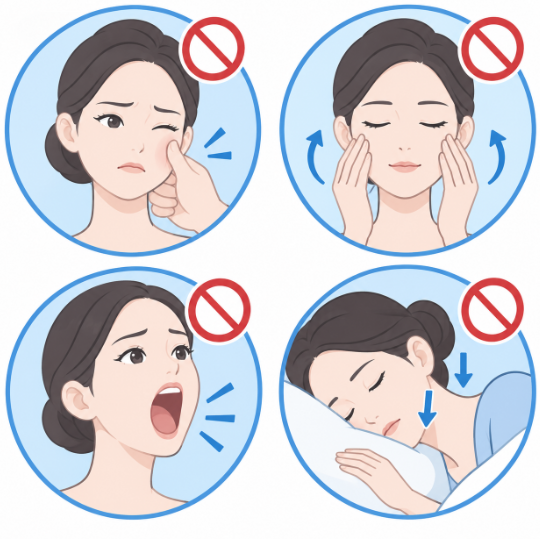
During recovery, it is best to avoid pressing or massaging the treated area firmly. Also, be careful in the early stage about opening your mouth too wide or applying strong pressure to your face. If you repeatedly pull on the skin with your hands because a dimple bothers you, you may actually irritate the tissue.
If the depression becomes more severe or persists, visit the medical team that performed the procedure to determine whether correction is needed. Severe pain, heat, or redness may signal a risk of infection, so prompt medical attention is necessary.
4. Checklist for Preventing Dimples
To reduce the likelihood of dimples, it is important to evaluate the skin condition and tissue characteristics of your face before the procedure.
Skin thickness, fat volume, and degree of sagging differ from person to person, so results can vary even when the same threads are used.
When choosing a Gangnam thread lift specialty clinic, look at how they plan insertion depth and lifting direction, rather than focusing only on the type and number of threads.
Also, because surface irregularities may appear in areas with thin skin, the treatment area and tension should be decided carefully. Pulling strongly without restraint does not necessarily lead to good results.
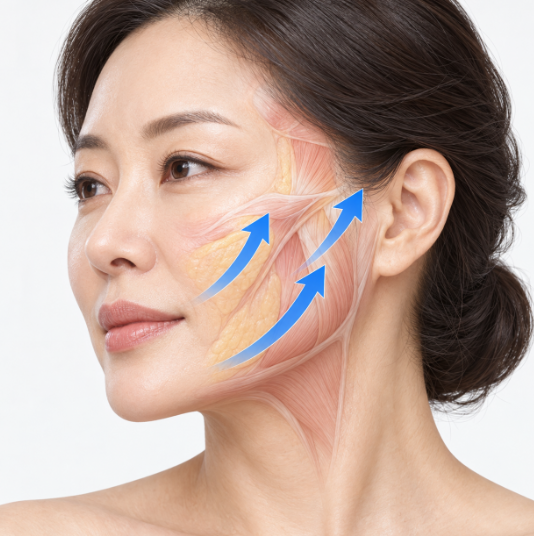
Tension should be distributed appropriately to the areas that need it while taking the face's natural movement into account. However, even when performed by an experienced medical team, the possibility of dimples cannot be completely eliminated.
During a consultation at a Gangnam thread lift specialty clinic,
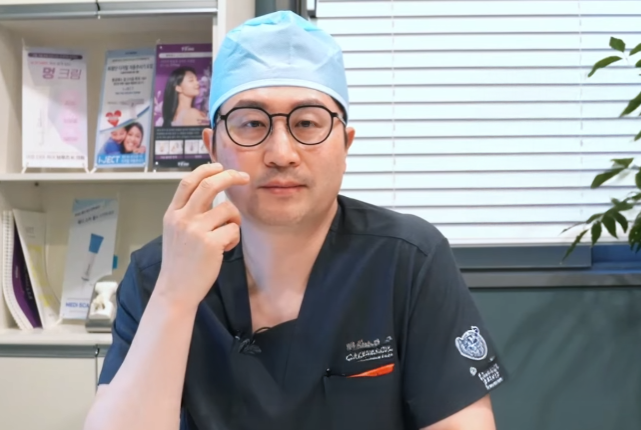
you should receive a thorough explanation of possible side effects, the recovery process, and how any problems would be handled if they arise.
-Business Hours-
Weekdays 9:00 ~ 18:00 Saturday 9:00 ~ 16:00 Public Holidays / Sundays Regular closure |
-Contact Us-
Face Plus Plastic Surgery Clinic | ||
Consultation phone: 02-541-8500 Inquiry: KakaoTalk inquiry |
-Directions-
Frequently Asked Questions
What exactly is a thread lift dimple?
A thread lift dimple is a phenomenon in which part of the skin surface sinks inward or develops irregular contours after the procedure. It mainly appears on the cheeks, under the cheekbones, around the corners of the mouth, and along the jawline, and it can become more noticeable when making facial expressions.
Why do dimples form after a thread lift?
The cause of dimples is difficult to pin down to a single factor. Key influences include the depth at which the thread is inserted, the direction of tissue pulling, and differences in tension. Thin skin or low cheek fat can make even small contour irregularities easier to notice.
Do dimples after the procedure become permanent?
Not all dimples that appear after a thread lift are permanent. Mild dimples may ease over several days to a few weeks, but recovery speed varies from person to person.
Are there any actions to avoid if a dimple appears?
Yes. During recovery, it is best to avoid pressing or massaging the treated area firmly. In the early stage, also be careful about opening your mouth too wide or applying strong pressure to your face. Repeatedly pulling the skin by hand because a dimple bothers you can irritate the tissue.
What should I do if a dimple is severe or painful?
If the depression is severe or accompanied by pain, have your medical team check it. Severe pain, heat, or redness may signal a risk of infection, so prompt medical attention is needed. If the depression persists, the medical team that performed the procedure can determine whether correction is needed.